From 13th Floor to Centre Stage: Haviah Mighty on Music, Milestones & Making Room
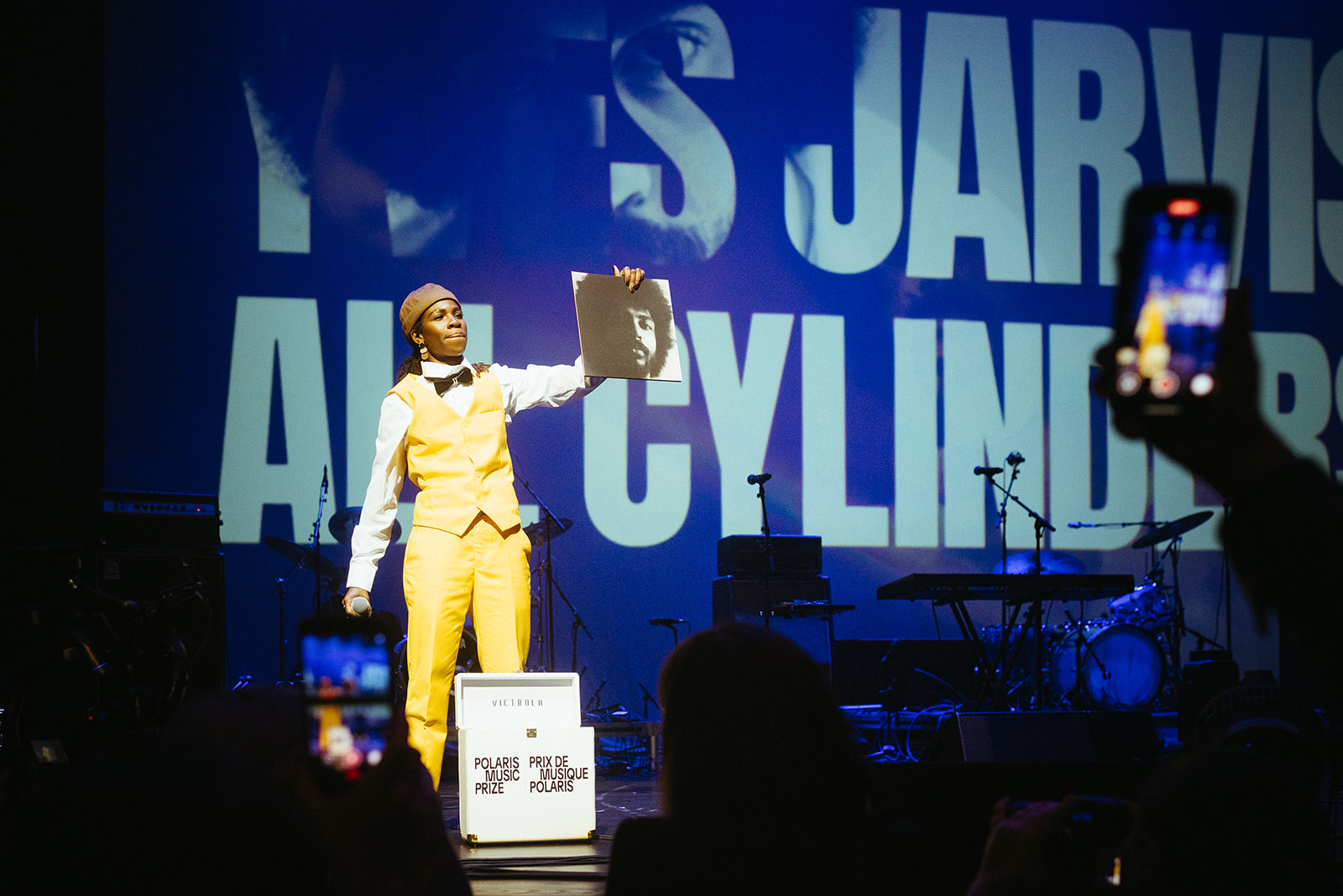
Haviah Might at the 2025 Polaris Concert & Award Ceremony, revealing the 2025 Polaris Album Prize Winner, Yves Jarvis – Photo by Wade Muir
Haviah Mighty has had an adventurous journey of growth and self-discovery since taking home the Polaris Music Prize in 2019 for the album 13th Floor. In this chat with juror DJ MelBoogie, Haviah reflects on being the first Black woman to win the Polaris and navigating through the music industry. The host for the 2025 Polaris Concert & Award Ceremony also discusses how winning the prize impacted her career, the challenges of creating music in the public eye, and what excites her in the Canadian music industry.
What’s one thing that you’re working on right now that excites you?
I’m working on a new album! I’m very, very excited about it. I feel through this journey of being a recognized musician, beginning in 2019 through the Polaris prize win, I’ve learned a lot about creating music in the public eye. When I won the Polaris in 2019, I had a very limited perception of people’s perspective on me. But once [my work] was recognized, it also kind of confused me, because I did not think that that would be the thing — to get the recognition about a project that talks about conflict and marginalized communities. I did not think that it was going to be the opening of the doors for my career in Canada. So, when it happened, it did a lot of complex things; it validated me in talking about whatever is true to me.
What impact did your Polaris win have on you and your music?
Oh, huge impact! Polaris made it possible to sustain a full-time career in music. I went [from working] full-time three months prior, then I dropped the project, and three months after that is when I won the Polaris! Timing was key for me, because it was 2019, and in 2020 Covid hit in March. It was this weird thing where I had a lot of momentum that Covid stunted, but I also was able to sustain in another way through that momentum, because I got a lot of projects and work throughout the pandemic. A lot of that started through the recognition of winning the Polaris. At that time, [the win] jumpstarted my career.
Take us back to that winning moment in 2019 when they called your name. How did you feel in that moment, and how did you feel afterwards?
I don’t think I’ve ever been more shocked in my life — considering how little I was known in the music industry at that time, and how reputable the Short List was for me. Performing was such a win to me. I don’t even think I bothered [to think] that I could win, because I was so stuck on how the performance was going to go and I’m pretty sure I performed not long before the announcement was made. And then when the performance was done, I was kind of relieved from that, but I forgot there was another thing to be nervous about! It was just unbelievably shocking. I think I was so certain that there wasn’t even a consideration that it might be me and so I think when it when my name was said, I don’t even think I’ll ever fully fathom the moment, because I don’t know if I fully was there. It was like, wow, I’m allowed to make music. It was just an epiphany of You can do this!” Which is big!
Why do you think celebrating exceptional and artful Canadian Music matters?
Creators that are not in the mainstream, or their sound or story is not mainstream, are worth celebrating. The music that comes out of this country is reflective of the people that live here and come here, the experiences that we have. I think it’s important to make sure the music we receive, what the radio stations are playing, or even what the creatives themselves get an opportunity to check out that inspire them, needs to be as vast as the community is, as variable as the demographic is, and is unique and interesting — and is not a formula. I think that having different artful creative types of music, visual expression, or fashion, is what Canada is [about]. Not trying to find the blueprint allows the true creativity of this country to really thrive and shine.
How did being the first black woman, to win a Polaris impact you? Do you find that that historic moment motivated you?
That’s a great question. I would say that, internally, it did not take away [from the win] because of the life I’ve lived, the space that I naturally took up — the acknowledgement felt good. It was more affirming, and it made me feel like the things that I’m saying that are not setting me back. To be acknowledged for that made me realize I had made a career out of the pain. Initially it was disheartening that no other Black woman has been acknowledged before me, because I know that I’m not the first to do what I’m doing. I feel like that’s the biggest thing I had to break in making new music: realizing that as we grow, we tell new stories. At the very end of the day, I hope [myself] and other counterparts of mine are breaking down doors just the same. There will be a couple of “firsts,” and then that will be over with. That’s my hope.
What’s up next for you?
I always feel that my music is leveling up with every project. I’ve taken a lot of boundaries down in terms of the way that I create music this year. I threw myself in the studio and it forced me to confront the walls I had up that made the studio sessions always happen in one way — I had to get real with those things. And once I took those walls down, I was able to create without overthinking, freestyle without writing first, just create from the feeling, more than what I think I’m supposed to be conveying. I’m very excited that this body of work is coming together the way that it is.